If you're planning a fishing trip to South Korea in late spring, there is one undisputed king of the seabed: the Flatfish (Kwang-eo). Known globally as Olive Flounder or Bastard Halibut, this species is Korea's "national fish."
While the fish is the same, the tactics couldn't be more different depending on which coast you choose. Here’s everything you need to know about targeting trophy flounder in Korea.
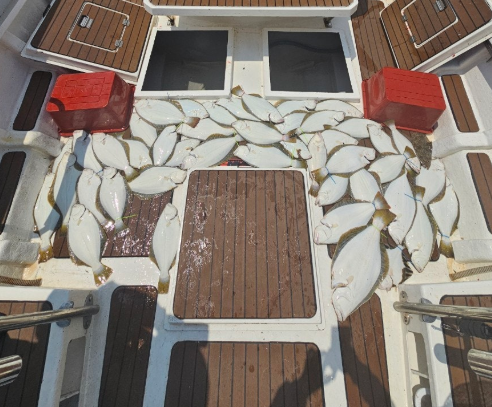
1. The West Coast: Deep Vertical Drifting
The West Sea (Yellow Sea) is famous for its extreme tidal ranges and shallow, sediment-rich waters. Because the water warms up later than other regions, the season truly kicks off in May.
- The Target: This is the season of "Dae-Kwang-eo" (Giant Flounder). These are monsters over 70cm that migrate to the shallows for spawning.
- The Gear: * Rod: ~6ft Baitcasting rod.
- Reel: Baitcasting reel with approx. 5kg drag power (ideal for vertical jigging).
- Rig: The "Downshot" (a version of the Bass Drop-shot).
- Tackle: 5-inch shad worms with 4/0 or 5/0 wide-gap/straight hooks. Sinker weights range from 75g to 180g depending on the tide.
- The Experience: It’s a game of patience, "reading" the bottom as the captain drifts the boat over hotspots. While it can feel repetitive, the thrill of hooking a 70cm+ giant makes every second of waiting worth it.
2. The East Coast: Shallow Water Casting
In contrast, the East Sea has almost no tidal range but is heavily influenced by wind and waves. The water drops off fast—hitting 100m depth just a short distance from the shore.
- The Target: Surprisingly, the fishing happens very close to the beach (7–15m depth). There’s even a record of a massive 106cm flounder caught in these eastern shallows during spring!
- The Gear: * Rod: 7–8ft Spinning rod.
- Reel: 3000 series spinning reel.
- Tackle: Jigs or metal lures (14g–40g).
- The Technique: Anglers use a technique called "Shakuri" (the sharp jerking motion used in squid fishing). Since flounder lie on the bottom and ambush prey from above, this aggressive movement triggers a violent strike.
| Feature | West Coast (Taean, Incheon) | East Coast (Uljin, Gangneung) |
| Price | ~120,000 KRW | ~100,000 KRW |
| Duration | ~7 Hours | ~5 Hours |
| Boat Size | Large (up to 22 people) | Small (6–10 people) |
| Style | Vertical (both sides of boat) | Casting (one side of boat) |
| Captain's Skill | Keeping lines vertical is key | Positioning for the perfect cast |
Pro Tip: Wild vs. Farmed?
In Korea, Flounder is a staple for Sashimi (Hoe) and Sushi because of its high meat yield.
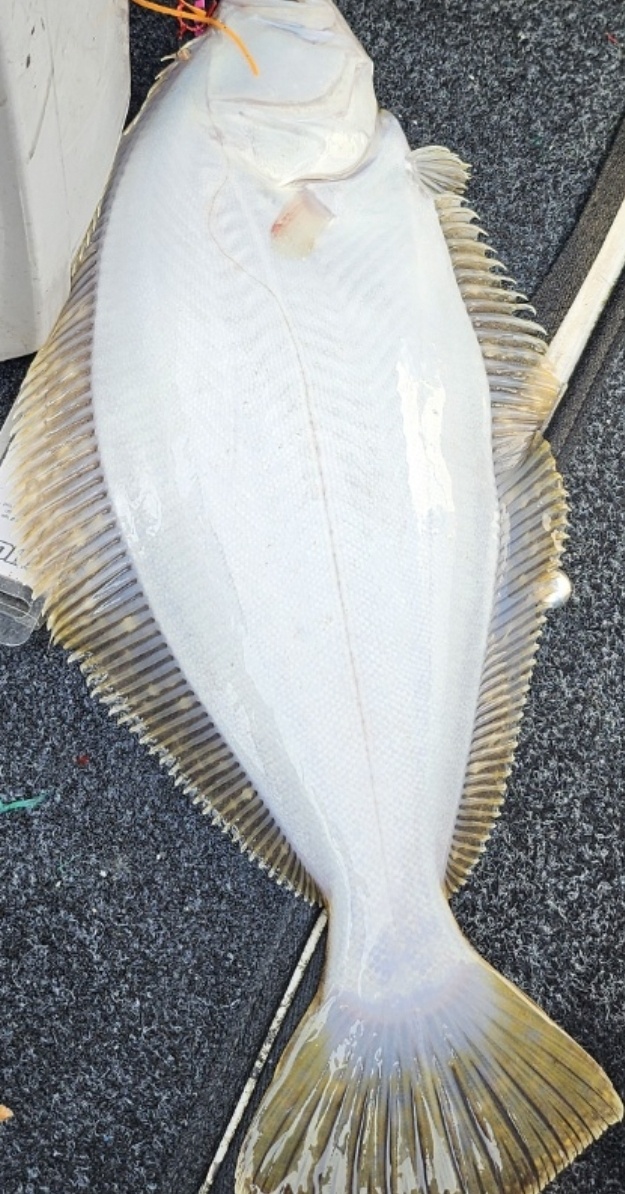
- Wild Flounder: Has a pure, snowy-white belly.
- Farmed Flounder: Usually has brownish or dark blotches on the belly.
- The "Papillon": If you catch a wild fish with a few dark spots, Korean anglers jokingly call it a "Papillon"—named after the movie character—implying it’s a farmed fish that "escaped" into the wild to be free!
Closing Thoughts
Whether you prefer the heavy-duty vertical game of the West or the active casting of the East, May and June are the golden months. If you find yourself in Korea, grab a rod and experience the unique charm of the Korean Flatfish.
1. 서해: ‘대광어’의 성지, 묵직한 수직 승부
서해는 조수간만의 차가 크고 수심이 얕은 편이지만, 5월이 되면 전국에서 낚시꾼들이 몰려듭니다. 바로 70cm 이상의 '대광어' 때문입니다.
- 시즌: 5월부터 본격 시작. (4월까지는 낮은 수온 때문에 동/남해보다 늦게 활기를 띕니다.)
- 핵심 포인트: 인천권, 태안권.
- 장비 및 채비: * 로도/릴: 6ft 내외의 로드 + 5kg 드랙력의 베이트릴. (수직으로 채비를 내리는 버티컬 낚시 특성상 베이트릴이 유리합니다.)
- 채비: 다운샷(Downshot) 리그 + 5인치 섀드웜.
- 바늘/봉돌: 4/0, 5/0 와이드갭 또는 스트레이트 훅. 봉돌은 물때에 따라 75g~180g까지 사용합니다.
- 특징: 바닥을 읽으며 조류에 배를 맡기는 낚시입니다. 다소 지루할 수 있지만, 80~90cm급 대광어가 걸렸을 때의 그 묵직한 손맛은 모든 지루함을 날려버립니다.
2. 동해: 연안 캐스팅의 짜릿함, 기술적 낚시
동해는 조수간만의 차는 거의 없지만 바람과 파도의 영향이 큽니다. 조금만 나가도 수심이 100m가 넘어가지만, 광어 낚시는 의외로 아주 가까운 연안에서 이루어집니다.
- 핵심 포인트: 울진, 강릉권.
- 장비 및 채비: * 로드/릴: 7~8ft 로드 + 3000번 스피닝릴.
- 채비: 지그헤드, 메탈지그 (14g~40g 정도면 전 상황 대응 가능).
- 특징: 수심 7~15m의 해변 근처에서 낚시가 진행됩니다. 광어의 공격성을 자극하기 위해 무늬오징어 낚시에서 쓰는 '샤크리(액션)' 기술을 사용하기도 합니다. 동해 연안에서도 봄철에 106cm라는 경이로운 기록이 나올 정도로 대물이 숨어있습니다.
[한눈에 비교하는 서해 vs 동해 선상 낚시]
| 구분 | 서해 (태안, 인천) | 동해 (울진, 강릉) |
| 선비 / 시간 | 약 12만 원 / 7시간 | 약 10만 원 / 5시간 |
| 선박 규모 | 22인승 (대형) | 6~10인승 (소형) |
| 낚시 방식 | 양면 낚시 (수직) | 단면 낚시 (캐스팅) |
| 핵심 기술 | 배를 잡아주는 선장님의 운전 | 앵글러의 캐스팅 및 액션 |
한국에서 ‘국민 생선’ 하면 단연 **광어(넙치)**입니다. 하지만 낚시의 세계로 들어오면 서해와 동해의 스타일은 완전히 달라집니다. 같은 어종을 잡지만 마치 다른 나라에 온 것 같은 두 바다의 매력을 정리해 드립니다.
재미있는 광어 상식: "배가 하야면 자연산?"
한국에서는 광어 배의 색깔로 자연산과 양식을 구분합니다.
- 자연산: 배 부위가 잡티 없이 깨끗하고 하얗습니다.
- 양식: 배 부위가 등 쪽처럼 갈색 얼룩(흑화 현상)을 띱니다.
- 빠삐용 광어: 가끔 자연산인데도 배에 얼룩이 있는 녀석들이 있습니다. 우리 낚시꾼들은 이들을 영화 속 주인공처럼 **"양식장을 탈출한 광어"**라는 의미로 **'빠삐용'**이라 부르며 반갑게 맞이하곤 하죠.
5월과 6월, 한국을 방문하거나 낚시 계획이 있다면 서해의 묵직함과 동해의 역동성 중 취향에 맞는 바다를 선택해 보세요. 어떤 곳을 가든 제철 광어의 쫄깃한 회와 초밥은 최고의 보상이 될 것입니다.